
Long-Lasting Dog Bones: How to Choose a Safer Chew
A long-lasting chew can keep a dog occupied, satisfy the urge to chew, and add enrichment to the day. But “dog bone” can mean many things—from edible dental chews to natural animal bones—and they don’t all carry the same benefits or risks. Choosing a chew that suits your dog’s size, age, chewing style, and health is more important than finding the toughest option.
What Counts as a Long-Lasting Dog Bone?
Products marketed as dog bones may include:
- Edible chews: Digestible treats made from ingredients such as plant-based starches or animal proteins. They vary in texture, calories, and how quickly dogs finish them.
- Rawhide chews: Chews made from processed animal hide. Some dogs may gulp large pieces, so supervision and an appropriate size are important.
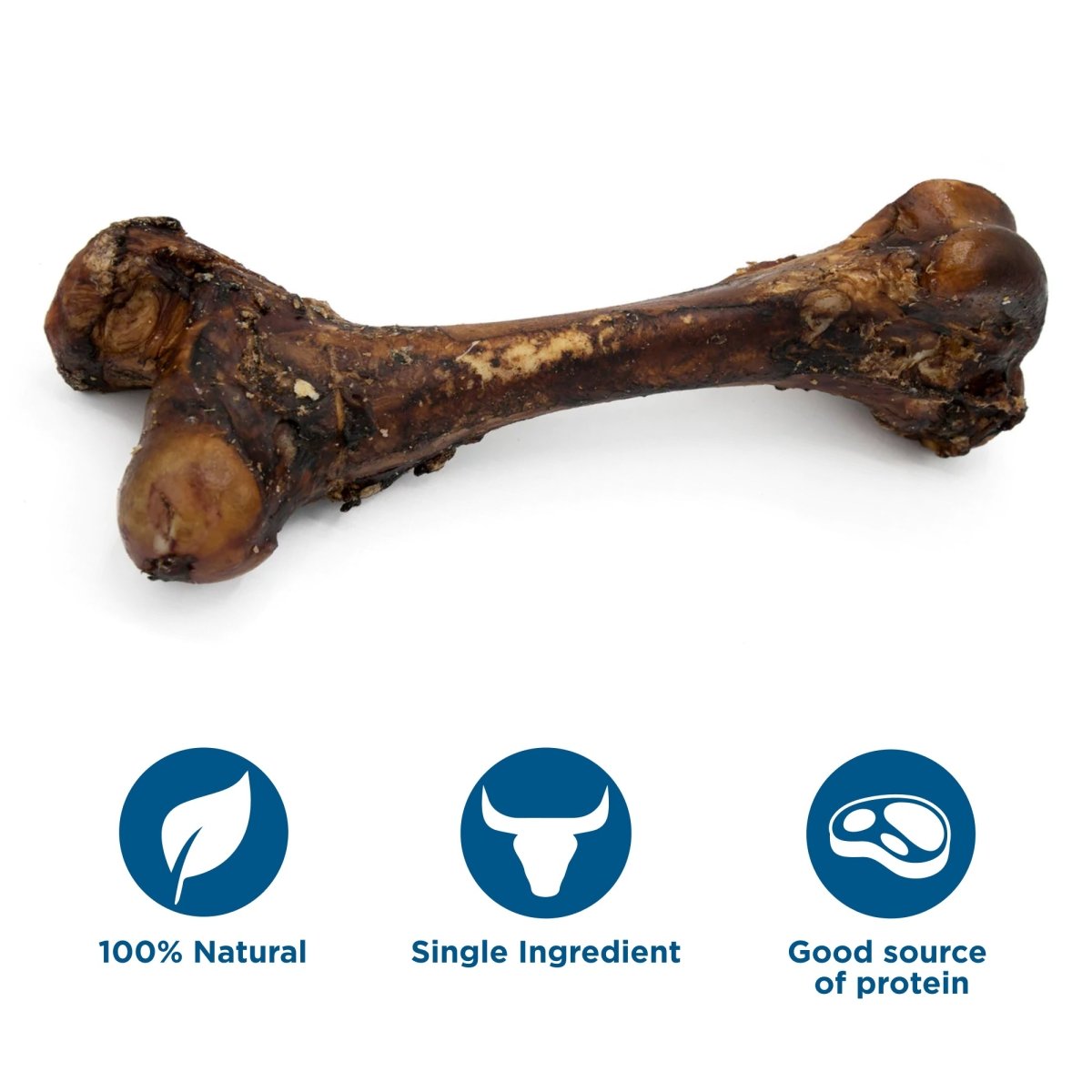
- Natural bones and hard animal chews: These may include beef bones, antlers, or similar products. Their hardness can pose a risk of tooth damage, and pieces may break off.
- Non-edible chew toys: Durable toys designed for chewing rather than eating. Check them regularly for damage and replace them if pieces start coming loose.
Always read the label to understand whether a product is meant to be eaten, how it should be used, and what size or weight range it is intended for.
How to Choose the Right Chew
Consider Your Dog’s Chewing Style
A gentle chewer may do well with a softer edible chew, while a determined chewer may need a sturdier product designed for that use. However, extra-hard chews are not automatically safer or better for strong chewers. If a chew does not yield at all when pressed with a fingernail, it may be hard enough to damage teeth. When in doubt, ask your veterinarian for recommendations.
Choose an Appropriate Size
Select a chew that is large enough that your dog cannot swallow it whole. Follow the package’s size guidance, and watch how your dog handles the chew. Remove it when it becomes small enough to swallow or when pieces begin breaking off.
Check Ingredients and Calories
Edible chews count as treats and can contribute a substantial number of calories. Check the feeding directions and ingredient list, especially if your dog has food sensitivities, allergies, or a medical condition. Treats and chews should fit into your dog’s overall diet.
Match the Chew to Your Dog’s Needs
Puppies, older dogs, and dogs with dental problems may need different textures. Some chews may not be appropriate for dogs with a history of swallowing objects, sensitive digestion, or certain health conditions. Your veterinarian can help you choose a suitable option.
Chew Safety Tips
- Supervise your dog whenever they have a chew.
- Offer chews in a calm place where your dog can focus on chewing.
- Take the chew away if your dog tries to swallow it whole, breaks off large chunks, or shows signs of discomfort.
- Do not give cooked bones. Cooking can make bones more brittle and prone to splintering.
- Inspect chews and chew toys before and after use. Discard items that are damaged, splintered, or small enough to swallow.
- Provide fresh water and follow the product’s storage and use instructions.
Contact a veterinarian promptly if your dog chokes, has trouble breathing, vomits repeatedly, seems unable to swallow, or may have swallowed a large piece or bone fragment. Do not try to induce vomiting unless a veterinary professional tells you to.
Are Long-Lasting Bones Good for Dental Health?
Chewing may help remove some material from tooth surfaces, but a chew is not a replacement for regular dental care. Very hard objects can crack or wear down teeth, and not every product marketed for dental health has been evaluated for your dog’s specific needs. Ask your veterinarian about tooth brushing, professional dental cleanings, and products with the Veterinary Oral Health Council (VOHC) Seal of Acceptance.
The Bottom Line
The best long-lasting dog bone is one your dog can chew safely—not simply the hardest or longest-lasting option on the shelf. Choose a product sized for your dog, check its ingredients and instructions, supervise every chewing session, and remove it before it becomes a choking hazard. For dogs with dental or health concerns, a veterinarian can help identify the safest choice.
Long-Lasting Dog Bones: FAQs About Safety, Sizing, and Chewing Time
- What are the safest long-lasting bones for dogs?
- Are long-lasting dog bones safe for puppies?
- How do I choose the right size bone for my dog?
- Can long-lasting dog bones break or damage a dog’s teeth?
- How long should I let my dog chew on a bone?
- What should I do if my dog swallows a piece of a bone?
What are the safest long-lasting bones for dogs?
The safest long-lasting “bones” are typically appropriately sized, veterinarian-recommended edible chews or durable chew toys designed for your dog’s size and chewing style—not cooked bones, antlers, or very hard animal bones, which can splinter or fracture teeth. Choose products with clear ingredients and use instructions, supervise your dog while chewing, and remove the chew if it breaks into pieces or becomes small enough to swallow. For dogs with dental problems, food sensitivities, or a habit of gulping chews, ask your veterinarian for a suitable option.
Are long-lasting dog bones safe for puppies?
Long-lasting dog bones may not be suitable for every puppy. Puppies’ teeth and jaws are still developing, and hard chews can cause tooth damage or pose a choking risk if pieces break off. Choose a chew specifically labeled for your puppy’s age and size, supervise them closely, and take it away if it becomes small, damaged, or difficult to chew. Ask your veterinarian which options are appropriate, especially while your puppy is teething.
How do I choose the right size bone for my dog?
Choose a bone or chew that’s large enough that your dog can’t swallow it whole, and follow the manufacturer’s size and weight recommendations. Consider your dog’s chewing style, too: a powerful chewer may break off chunks, while a smaller or gentler dog may need a different option. Supervise your dog while chewing, and take the bone away if it becomes small enough to swallow or starts breaking apart. If you’re unsure what’s appropriate, ask your veterinarian for guidance.
Can long-lasting dog bones break or damage a dog’s teeth?
Yes. Long-lasting dog bones—especially very hard options such as antlers, natural bones, and some nylon chews—can crack, chip, or wear down a dog’s teeth. A chew that feels extremely hard and does not give under pressure may pose a greater risk. Choose a chew suited to your dog’s size and chewing style, supervise chewing, and remove it if it breaks or becomes small enough to swallow. Ask your veterinarian for advice if your dog has dental problems or you’re unsure which chew is appropriate.
How long should I let my dog chew on a bone?
How long your dog should chew on a bone depends on the product and your dog’s chewing style, so follow the package directions and supervise the entire session. For a new chew, start with a brief session—about 10 to 15 minutes—and check how your dog handles it; stop sooner if they’re chewing aggressively, trying to swallow large pieces, or showing discomfort. Take the bone away when it becomes small, damaged, or splintered, and ask your veterinarian for advice if your dog has dental or digestive issues.
What should I do if my dog swallows a piece of a bone?
If your dog swallows a piece of a bone, contact your veterinarian promptly for advice, even if your dog seems fine. Don’t try to induce vomiting or give medication unless a veterinary professional instructs you to. Seek emergency veterinary care if your dog is choking, having trouble breathing or swallowing, vomiting, showing abdominal pain, or acting unusually tired. Keep the packaging or note what kind of bone was swallowed and roughly how much, as this can help your veterinarian recommend next steps.
Related Posts

Durable Comfort: The Benefits of a Waterproof Dog Bed
The Benefits of a Waterproof Dog Bed The Benefits of…

Elevate Your Grooming Game with Top-Quality Dog Grooming Apparel
The Importance of Dog Grooming Apparel The Importance of Dog…
Understanding Dog Sitting Prices: Factors to Consider for Affordable Care
Dog Sitting Prices The Cost of Dog Sitting: What You…