
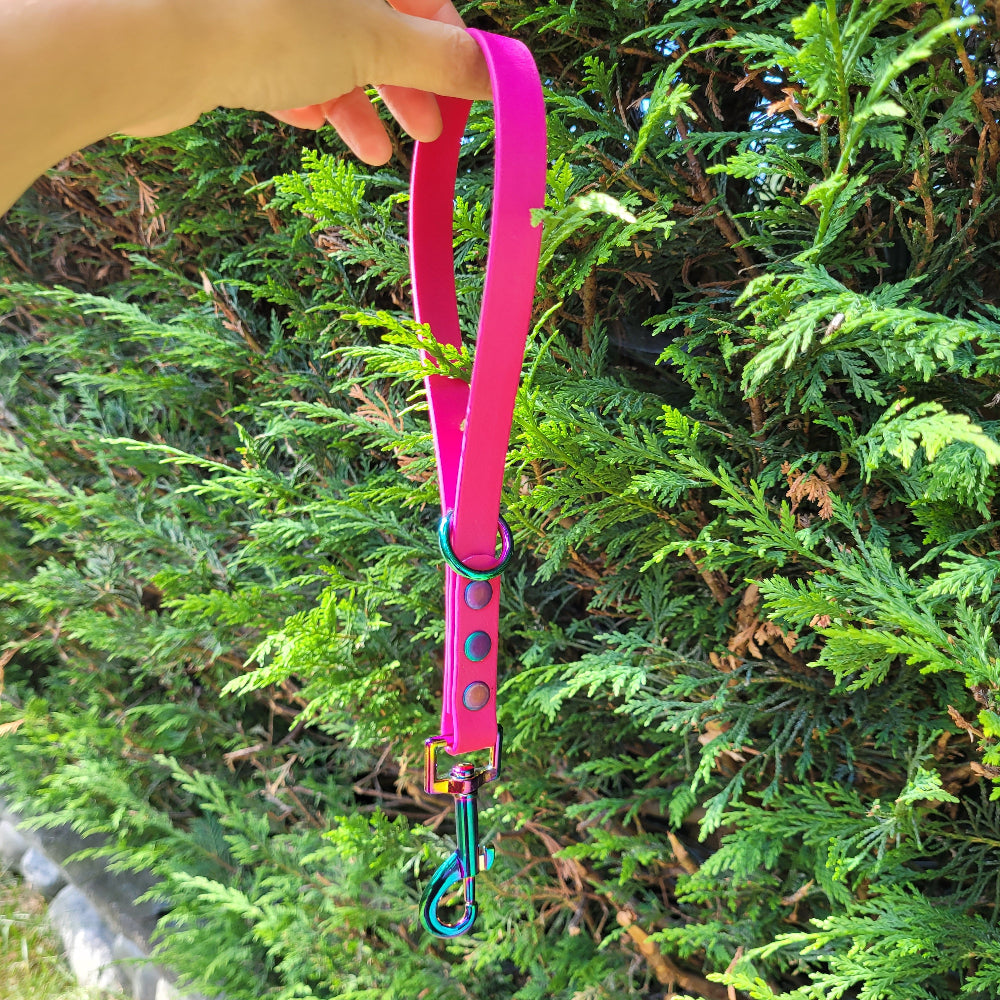
Biothane Leashes for Dogs: A Practical Guide
A dog leash should feel comfortable in your hand, hold up to everyday use, and suit the places you and your dog go. Biothane leashes are a popular alternative to traditional leather and fabric options, especially for people who walk in wet, muddy, or sandy conditions. Here’s what to know before choosing one.
What Is Biothane?
Biothane is a brand name for coated webbing. The leash has a strong webbing core covered with a smooth, flexible coating, often made from a type of thermoplastic or polyurethane. The result is a material that resembles leather in some ways but is generally easier to clean and less absorbent.
“Biothane” is sometimes used informally to describe similar coated-webbing products, so check a product’s specifications if the material or construction matters to you.
Benefits of Biothane Leashes
- Easy to clean: Mud, dirt, and many everyday messes can usually be wiped or rinsed off.
- Water-resistant: The coating does not soak up water like many fabric leashes, making it useful for rainy walks and adventures near water.
- Comfortable to handle: The smooth surface is flexible and may feel less abrasive than some rough or wet fabric leashes.
- Available in many styles: Biothane leashes come in different lengths, widths, colors, and hardware options.
- Useful for long lines: Because the material is easy to rinse clean, it can be a convenient choice for training or supervised outdoor exploration.
Things to Consider
Biothane is not the perfect choice for every dog or situation. The surface can feel slippery when wet, and a leash may be uncomfortable or cause friction if it slides quickly through your hand. Avoid wrapping any leash around your fingers or wrist, especially when walking a strong or reactive dog.
Durability depends on the webbing core, coating, stitching, hardware, and overall construction. A leash can still wear out or fail, particularly if it is chewed, damaged, or used with a dog who pulls hard. Inspect it regularly, paying close attention to the clasp, stitching, and areas near the handle.
How to Choose the Right Leash
- Match the width to your dog: A wider leash may be easier to hold and may be suited to larger dogs, while a narrower one can be lighter for small dogs. Follow the maker’s weight and use guidance.
- Choose a suitable length: A standard leash works well for everyday walks. A longer line can give a dog more room to explore during supervised training in a safe area.
- Check the clasp: Choose sturdy hardware that fits your dog’s collar or harness ring securely. Keep in mind that metal hardware can add weight.
- Consider the handle: Some leashes have a simple loop, while others include padded handles or extra traffic handles for closer control.
- Think about your routine: If you often walk in rain, mud, or near water, a coated leash may be especially convenient. For other needs, a different material may feel better in your hand.
Cleaning and Care
After a muddy walk, rinse the leash with clean water or wipe it with a damp cloth. For more stubborn dirt, use mild soap and rinse thoroughly. Let it air-dry before storing. Avoid harsh cleaners unless the manufacturer says they are safe for the material, and check the leash and hardware for wear before each walk.
Using a Biothane Leash Safely
Use a leash that is appropriate for your dog’s size and behavior, and attach it to a well-fitting collar or harness. Keep a secure grip without wrapping the leash around your hand. Long lines should be used in open, appropriate spaces, away from roads and other hazards, and should not be allowed to tangle around people or dogs. Replace the leash if the coating splits, the core is exposed, or any part of the hardware becomes loose or damaged.
Is a Biothane Leash Right for Your Dog?
A Biothane leash can be a practical option for dog owners who want a flexible, easy-to-clean leash for everyday walks or outdoor activities. The best choice depends on your dog, your preferred grip, and how you plan to use it. Compare the leash’s construction, size, and hardware, and choose one that feels secure and comfortable for both you and your dog.
7 Essential Tips for Choosing and Caring for Biothane Dog Leashes
- Choose a leash length that suits your walks and training.
- Match leash width to your dog’s size and strength.
- Check that clips and hardware are sturdy and secure.
- Wipe off mud and dirt with soap and water.
- Let the leash dry before storing it.
- Inspect straps and stitching regularly for wear.
- Keep the leash away from sharp edges and excessive heat.
Choose a leash length that suits your walks and training.
Choose a leash length that fits your walks and training goals. A standard-length leash can help keep your dog close on sidewalks and in busy areas, while a longer Biothane line gives them more room to explore during supervised practice in a safe, open space. Consider where you’ll use the leash most, and make sure you can maintain control without letting the line tangle around people, dogs, or obstacles.
Match leash width to your dog’s size and strength.
Choose a Biothane leash width that suits both your dog’s size and pulling strength. A wider leash may be easier to grip and better suited to a strong, larger dog, while a narrower leash is often lighter and more comfortable for a small dog. Check the manufacturer’s recommendations, and make sure the leash feels secure in your hand without being unnecessarily bulky.
Check that clips and hardware are sturdy and secure.
Before choosing a Biothane leash, check that its clip and other hardware are sturdy, securely attached, and suited to your dog’s size and strength. The clasp should close firmly and connect reliably to your dog’s collar or harness without sticking or coming loose. Inspect the hardware regularly for damage, rust, or wear, and replace the leash if any part becomes unreliable.
Wipe off mud and dirt with soap and water.
To clean mud and dirt from a Biothane dog leash, wipe it with a cloth or sponge dipped in mild soapy water, then rinse or wipe away any soap residue with clean water. Let the leash air-dry before storing it.
Let the leash dry before storing it.
After cleaning or walking in wet weather, let your Biothane leash dry completely before storing it. Although the coated material resists moisture, water can linger around the handle, stitching, or hardware. Air-drying the leash helps prevent trapped dampness and keeps it ready for your next walk.
Inspect straps and stitching regularly for wear.
Inspect your Biothane leash regularly for signs of wear, including cracks or peeling in the coating, exposed webbing, frayed edges, loose stitching, and damage around the handle or hardware. Pay special attention to the areas that experience the most pulling. If you notice any damage, replace the leash before using it again to help keep walks safe.
Keep the leash away from sharp edges and excessive heat.
Keep your Biothane leash away from sharp edges and excessive heat to help prevent damage. Rough surfaces, blades, or jagged corners can nick or cut the coating, while high temperatures may weaken or deform the material. Store the leash in a cool, shaded place, and check it regularly for cuts, cracks, or other signs of wear.
Related Posts

Unlocking the Power of Essential Supplements for Optimal Health
The Importance of Supplements for Overall Health The Importance of…

Chill Out: The Best Frozen Dog Treats to Keep Your Pup Cool and Happy
The Cool Canine Delight: Frozen Dog Treats The Cool Canine…
Discover the Benefits of Dehydrated Dog Treats for Your Canine Companion
The Benefits of Dehydrated Dog Treats The Benefits of Dehydrated…