
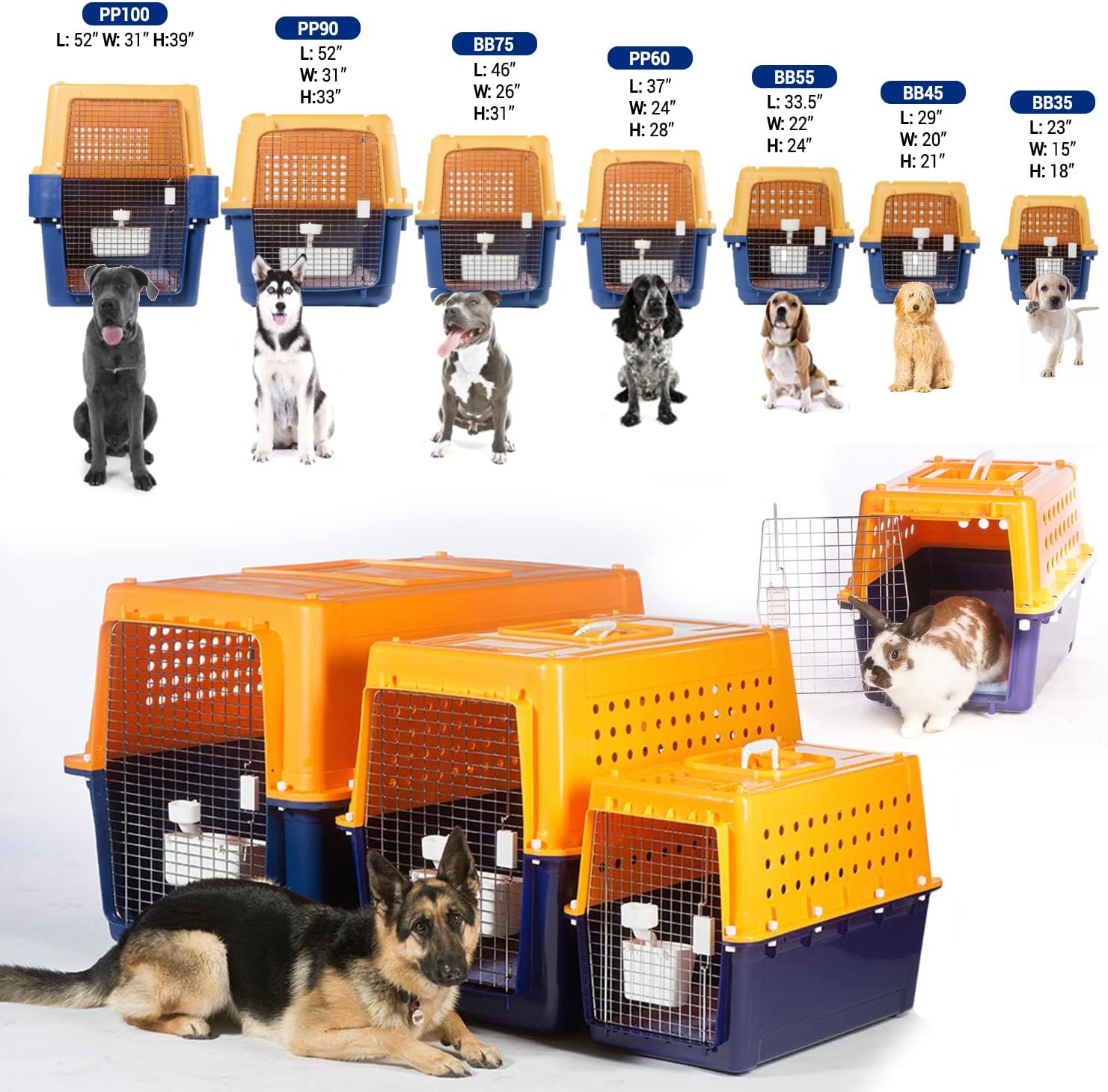
IATA Dog Crates: How to Choose the Right Travel Kennel
When planning air travel with a dog, choosing the right crate is an important part of keeping your pet safe and comfortable. The term “IATA dog crate” usually refers to a travel kennel designed to meet the International Air Transport Association’s container guidelines for transporting live animals. However, airlines set their own rules and may have requirements beyond those guidelines, so always confirm the details with your airline before booking.
What Is an IATA Dog Crate?
IATA publishes Live Animals Regulations that provide guidance for transporting animals by air. These guidelines cover such considerations as crate size, construction, ventilation, and access to food and water. People often call a kennel that follows these guidelines an “IATA-approved crate,” but IATA does not approve or certify individual crates. The airline decides whether a particular kennel is acceptable for a specific trip.
Requirements can differ depending on the airline, aircraft, destination, and whether your dog is traveling in the cabin or in the cargo hold. Check the airline’s current pet-travel policy before purchasing a crate.
How to Choose the Correct Crate Size
Your dog should be able to stand naturally, turn around, sit, and lie down in the crate. A kennel that is too small can be uncomfortable and may not be accepted for travel. One that is excessively large may also be unsuitable, depending on the airline’s rules.
IATA-style sizing guidance uses your dog’s measurements to determine minimum crate dimensions. Measurements commonly include:
- Length: From the nose to the base of the tail.
- Leg height: From the floor to the elbow.
- Width: Across the widest part of the dog.
- Standing height: From the floor to the top of the head or ears, whichever is higher when standing naturally.
Guidance often calculates the crate’s internal length using the dog’s body length plus part of the leg-height measurement, and its width using approximately twice the dog’s width. The crate must also provide enough height for the dog to stand comfortably. Since measurement methods and airline policies can vary, use the airline’s sizing instructions as the final reference.
Features to Look For
A travel crate should be sturdy, secure, and large enough for your dog to move comfortably. Before buying, check that it has:
- Strong construction that can withstand normal handling
- A secure door and reliable latches
- Ventilation on the sides required by the airline
- A leak-resistant floor with absorbent bedding
- Food and water containers that can be accessed or refilled as required
- No sharp edges or openings where your dog could become trapped
Some airlines require specific fasteners, door designs, or crate materials. They may also require wheels to be removed or secured. Do not assume a kennel meets every airline’s rules just because it is marketed as “airline compliant” or “IATA-style.”
Help Your Dog Get Comfortable
Introduce the crate well before travel. Leave it open at home, add familiar bedding if permitted, and encourage your dog to enter voluntarily with meals, treats, or toys. Gradually build up the time your dog spends inside, including short periods with the door closed.
A dog that is comfortable in the crate may find travel less stressful. Avoid waiting until travel day to introduce a new kennel, and ask your veterinarian for advice if your dog has health or anxiety concerns. Do not give your dog sedatives for air travel unless your veterinarian and airline have specifically advised you on an appropriate plan.
Check the Airline’s Rules Before You Fly
Contact the airline before buying your crate and again before travel, since policies can change. Confirm whether your dog can travel in the cabin or must travel in the cargo hold, the maximum permitted crate dimensions, required documentation, and any restrictions based on breed, weather, or aircraft type. International trips may also involve destination-specific health and import requirements.
The right dog crate is one that fits your dog, meets the airline’s current requirements, and helps your pet travel as safely and comfortably as possible. Careful measuring, early crate training, and direct confirmation with the airline can make the journey smoother for both of you.
IATA Dog Crate FAQs: Airline Approval, Labeling, and Impact Crates
- How do I know if my dog crate is airline approved?
- What is an IATA approved crate?
- How do I label my dog’s crate for a flight?
- Are impact crates IATA approved?
How do I know if my dog crate is airline approved?
To find out whether your dog crate is accepted for air travel, check your airline’s current pet-travel requirements and compare them with the crate’s size, construction, ventilation, door, and fasteners. “IATA-approved” is a common marketing phrase, but IATA does not certify individual crates, and airlines make the final decision. Contact the airline with your crate’s make, model, and dimensions before you travel, and confirm that it’s suitable for your specific route and flight.
What is an IATA approved crate?
An “IATA-approved crate” is a common term for a pet travel kennel designed to meet the International Air Transport Association’s Live Animals Regulations for air travel. IATA does not certify or approve individual crates; the airline decides whether a specific crate meets its requirements for your dog and trip. Before you buy or travel, check the airline’s current rules for crate size, construction, ventilation, and secure closures.
How do I label my dog’s crate for a flight?
Label your dog’s crate with your name, phone number, email address, and destination contact information, along with your dog’s name and any essential care instructions. Attach the labels securely to the outside, and place a duplicate information card in a waterproof sleeve on the crate. Follow your airline’s specific labeling requirements; it may also provide tags or require labels such as “Live Animal” and “This Side Up.” Avoid putting loose items or information inside where they could shift or become inaccessible, and make sure all details are current and easy to read.
Are impact crates IATA approved?
Impact crates are not automatically “IATA approved”—IATA does not certify or approve individual crates. Some Impact models may meet relevant IATA Live Animals Regulations guidelines, but acceptance depends on the specific model, your dog’s size, and the airline’s requirements. Before traveling, check the crate’s specifications and confirm directly with your airline that it will be accepted for your route and aircraft.