
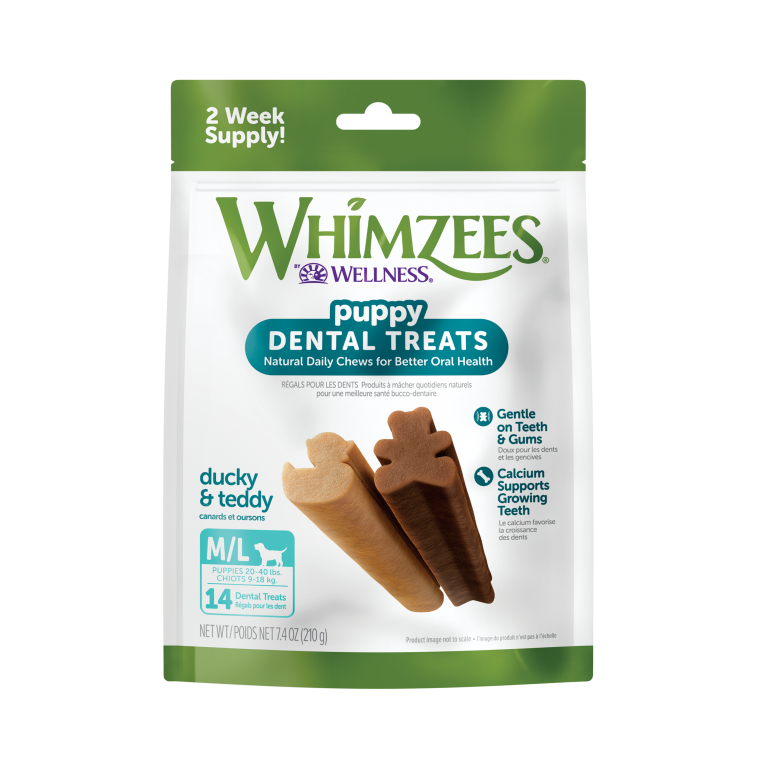
Best Dental Treats for Dogs: What to Look For
Dental treats can help reduce plaque and tartar while giving your dog something enjoyable to chew. The best choice depends on your dog’s size, age, chewing habits, and health needs. Dental treats can be a useful part of an oral-care routine, but they do not replace toothbrushing or veterinary dental care.
What Makes a Dental Treat a Good Choice?
Look for a treat that is appropriately sized for your dog and designed to encourage safe, thorough chewing. A treat that is too small may be swallowed whole, while one that is too large or hard may be difficult to chew.
- Veterinary support: Check whether the product has been evaluated by the Veterinary Oral Health Council (VOHC). The VOHC awards its Seal of Acceptance to products that meet standards for helping control plaque or tartar.
- Suitable texture: The treat should give a little under pressure rather than feeling rock-hard. Very hard chews can damage teeth.
- Correct size: Follow the manufacturer’s weight and size guidance, and supervise your dog while chewing.
- Reasonable calories: Treats count toward your dog’s daily food intake. Check the calorie information and adjust meals if needed.
- Appropriate ingredients: Review the label for ingredients your dog needs to avoid, especially if they have allergies or a sensitive stomach.
Types of Dental Treats to Consider
VOHC-Accepted Dental Chews
For many dogs, a dental chew with the VOHC Seal of Acceptance is a good place to start. Products may be evaluated for reducing plaque, tartar, or both. Check the current VOHC list and the product packaging, since acceptance applies to specific products and claims.
Flexible, Textured Chews
Some dental treats have ridges or a textured shape intended to help rub tooth surfaces as a dog chews. Choose a chew that is flexible enough to reduce the risk of tooth damage, and select the size recommended for your dog.
Dental Treats for Small or Senior Dogs
Small dogs may need smaller treats that are easy to hold and chew. Senior dogs, or dogs with missing teeth or dental disease, may need a softer option—or may need to avoid chews altogether. Ask your veterinarian what is safe for your dog’s mouth.
Dental Diets and Other Products
Some veterinary diets, water additives, and oral-care products may support dental health. They are not all interchangeable, and not every product is appropriate for every dog. Your veterinarian can help you choose an option that fits your dog’s needs.
Chews to Use With Caution
Extremely hard items can crack or fracture teeth. Avoid giving your dog bones, antlers, hooves, hard nylon toys, or other objects that do not give under pressure unless your veterinarian specifically recommends them. Rawhide and other chew products may also pose choking or digestive risks, especially if a dog gulps large pieces.
Supervise chewing, remove a treat when it becomes small enough to swallow, and stop using it if your dog coughs, gags, vomits, or has difficulty chewing. If your dog has a history of swallowing chews quickly, ask your veterinarian for safer alternatives.
Dental Treats Are Not a Substitute for Brushing
Brushing your dog’s teeth regularly with a dog-safe toothbrush and toothpaste is one of the most effective ways to support oral health. Never use human toothpaste, which may contain ingredients that are unsafe for dogs. Dental treats can complement brushing, but they cannot reliably clean every tooth surface or treat existing dental disease.
How to Choose the Right Treat
- Ask your veterinarian whether your dog has dental, dietary, or chewing-related concerns.
- Look for the VOHC Seal of Acceptance and confirm the product’s intended benefit.
- Choose the size recommended for your dog’s weight.
- Check calories and ingredients, and introduce the treat gradually.
- Supervise your dog and monitor for discomfort or digestive upset.
The Bottom Line
The best dental treat is one your dog can chew safely, that suits their size and health needs, and that has credible evidence supporting its dental benefit. Look for VOHC-accepted products, avoid excessively hard chews, and use treats alongside regular brushing and professional veterinary care. If your dog has bad breath, red or bleeding gums, loose teeth, or trouble eating, schedule a veterinary exam rather than relying on treats alone.
Top 7 FAQs About the Best Dental Treats for Dogs: Expert Recommendations and Insights
- Are greenies or dentastix better?
- Do vets recommend dental chews for dogs?
- Do dog dental treats really work?
- What is good for dogs to chew on for their teeth?
- What dental sticks do vets recommend?
- What are the healthiest dental treats for dogs?
- Do vets actually recommend greenies?
Are greenies or dentastix better?
Neither Greenies nor Dentastix is automatically better for every dog. Both brands offer dental chews, but the best choice depends on your dog’s size, chewing habits, dietary needs, and the specific product’s evidence for reducing plaque or tartar. Check the package for the correct size and calories, and look for the VOHC Seal of Acceptance on the exact product you’re considering. Supervise your dog while chewing, and ask your veterinarian for guidance if your dog has dental problems, allergies, or a sensitive stomach.
Do vets recommend dental chews for dogs?
Yes, many veterinarians recommend dental chews as one part of a dog’s oral-care routine, especially products accepted by the Veterinary Oral Health Council (VOHC) for helping reduce plaque or tartar. Choose a chew that’s the right size and texture for your dog, supervise chewing, and count its calories as part of your dog’s daily diet. Dental chews don’t replace regular toothbrushing or veterinary dental care, so ask your vet what’s appropriate if your dog has dental problems, missing teeth, or a tendency to swallow chews whole.
Do dog dental treats really work?
Dog dental treats can help reduce plaque and tartar when used as directed, especially products accepted by the Veterinary Oral Health Council (VOHC). They work through chewing and, in some cases, specially designed textures or ingredients—but results vary, and treats won’t clean every tooth or remove existing dental disease. Use them as a supplement to regular brushing and veterinary checkups, and choose a size and texture that are safe for your dog.
What is good for dogs to chew on for their teeth?
A VOHC-accepted dental chew that’s the right size for your dog can help reduce plaque or tartar as they chew. Choose a treat with some flexibility—not one that’s rock-hard—and supervise your dog to prevent choking or swallowing large pieces. Dental chews can complement regular toothbrushing, but they don’t replace it. Ask your veterinarian what’s safe if your dog has sensitive teeth, dental disease, or a history of swallowing chews whole.
What dental sticks do vets recommend?
Veterinarians often recommend dental sticks that carry the Veterinary Oral Health Council (VOHC) Seal of Acceptance, which means the specific product has met standards for helping reduce plaque or tartar. The right stick depends on your dog’s size, age, chewing style, calorie needs, and dental health, so follow the package’s sizing directions and ask your veterinarian for a personalized recommendation—especially if your dog has sensitive teeth, missing teeth, or a history of swallowing chews whole. Supervise chewing, and remember that dental sticks complement, but don’t replace, regular toothbrushing and veterinary dental care.
What are the healthiest dental treats for dogs?
The healthiest dental treats for dogs are appropriately sized, low in calories, and made with ingredients your dog can safely tolerate. Look for products with the Veterinary Oral Health Council (VOHC) Seal of Acceptance, which indicates they meet standards for helping reduce plaque or tartar. Choose a chew that isn’t excessively hard, supervise your dog while they chew, and ask your veterinarian for guidance if your dog has allergies, dental problems, or a sensitive stomach. Dental treats can support oral care, but they don’t replace regular toothbrushing or professional veterinary cleanings.
Do vets actually recommend greenies?
Yes, many veterinarians recommend GREENIES™ Dental Treats as one option for supporting dogs’ oral health; the product has earned the Veterinary Oral Health Council (VOHC) Seal of Acceptance for helping control plaque and tartar. They’re not right for every dog, though—choose the correct size, supervise chewing, and account for the calories. Dental treats can complement regular toothbrushing, but they don’t replace it or professional veterinary care.
Related Posts
Essential Dog Travel Accessories for Your Next Adventure
Dog Travel Accessories: Must-Haves for Your Next Adventure Dog Travel…
Rapawzel: The Enchanting Canine with a Fairy Tale Coat
Rapawzel: The Canine Rapunzel Rapawzel: The Canine Rapunzel Meet Rapawzel,…
The Charming Toy Poodle Dog: A Small Companion with a Big Personality
The Toy Poodle Dog: A Charming and Intelligent Companion The…